Motorsport Photography at Teesside Autodrome: Capturing Speed, Energy and Atmosphere
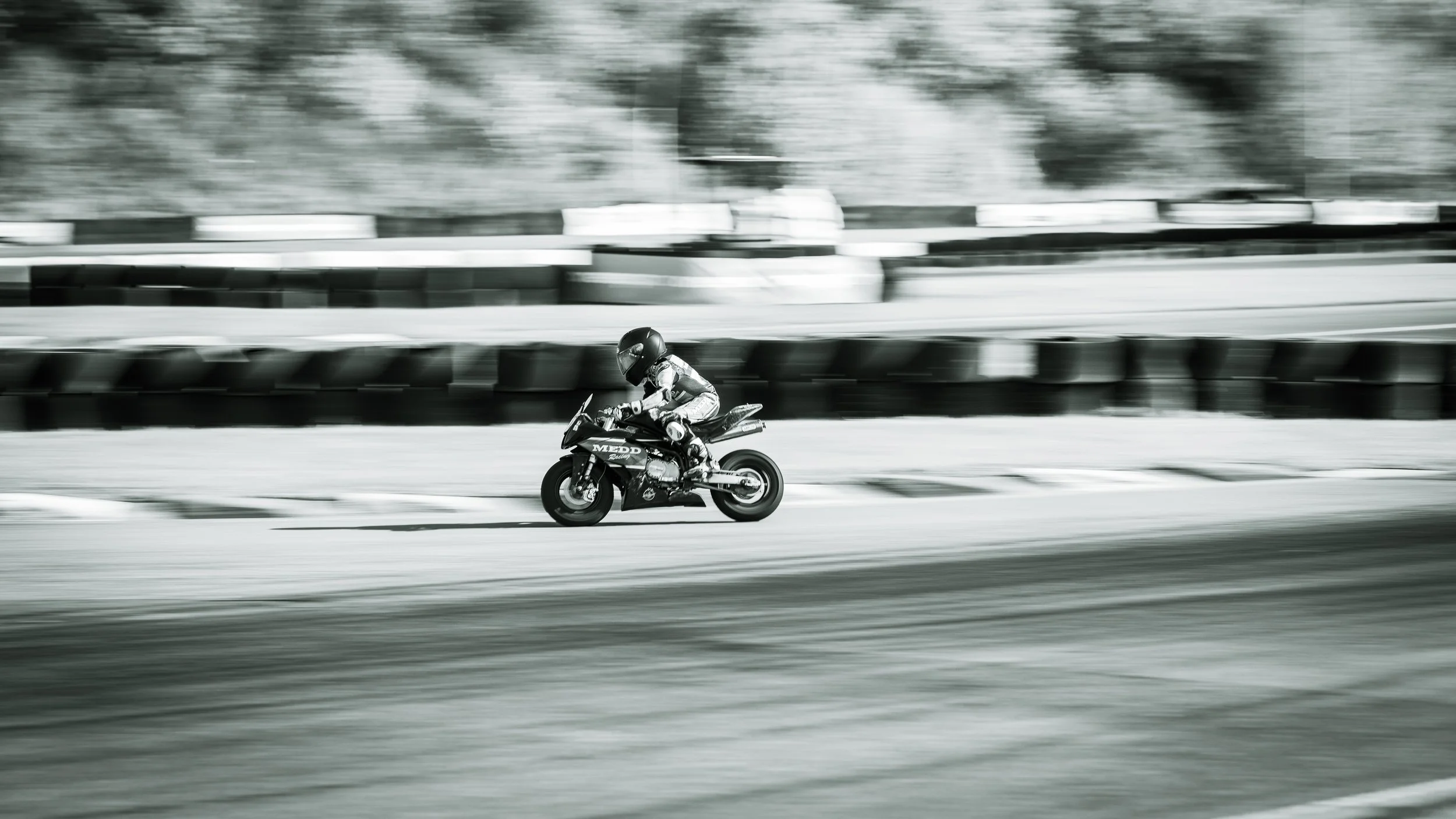
Motion Blur - its a trial and error game!
I can’t imagine doing this with a film camera from a cold start, it takes a lot of active tweaking to get an image like this. The essential stats - 1/60 F5.6 / 90mm on a 70-200 GM
Motorsport photography is about much more than freezing a fast-moving subject. The best images should communicate the atmosphere of the event, the concentration of the competitors and the speed and energy of the racing.
I recently spent a day at Teesside Autodrome photographing competitors during a Supermoto event. It was a great opportunity to use a variety of photographic techniques, from documentary-style reportage and environmental portraits to creative motion blur.
Because the competitors were children, I took particular care to ensure that the photographs used for this case study do not identify individual competitors. Instead, the emphasis is on the sport itself — the bikes, movement, atmosphere and excitement of the event.
A versatile approach to motorsport photography
One of the things I enjoy about photographing motorsport is that there is rarely just one type of photograph to take.
The obvious opportunities are the high-speed action shots, but spending time around a circuit reveals many other possibilities.
Competitors preparing for their races, bikes waiting in the paddock, the circuit environment and the anticipation before a race can all contribute to telling the story of an event.
For this reason, I approached the day with a versatile set of photographic techniques, rather than relying exclusively on conventional action photography.
Reportage photography
The reportage images were about documenting the event as it unfolded.
Rather than simply photographing bikes as they passed at speed, I looked for photographs that conveyed the wider experience of being at the circuit.
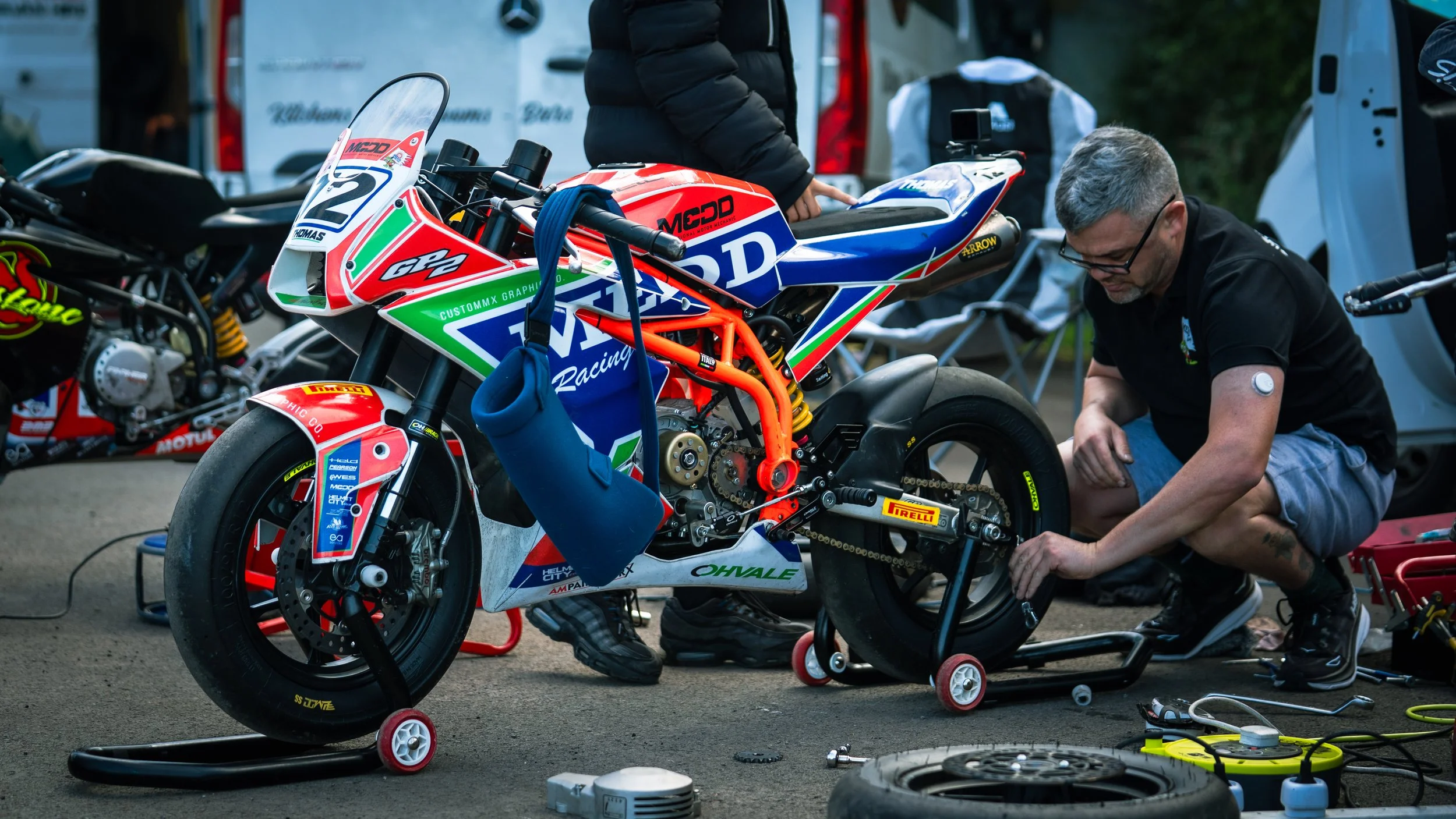
The bikes, equipment, circuit and surrounding activity all became part of the story.
This documentary approach is particularly useful for events because it creates a collection of images that works together rather than simply producing a series of similar action photographs.
Photographing competitors
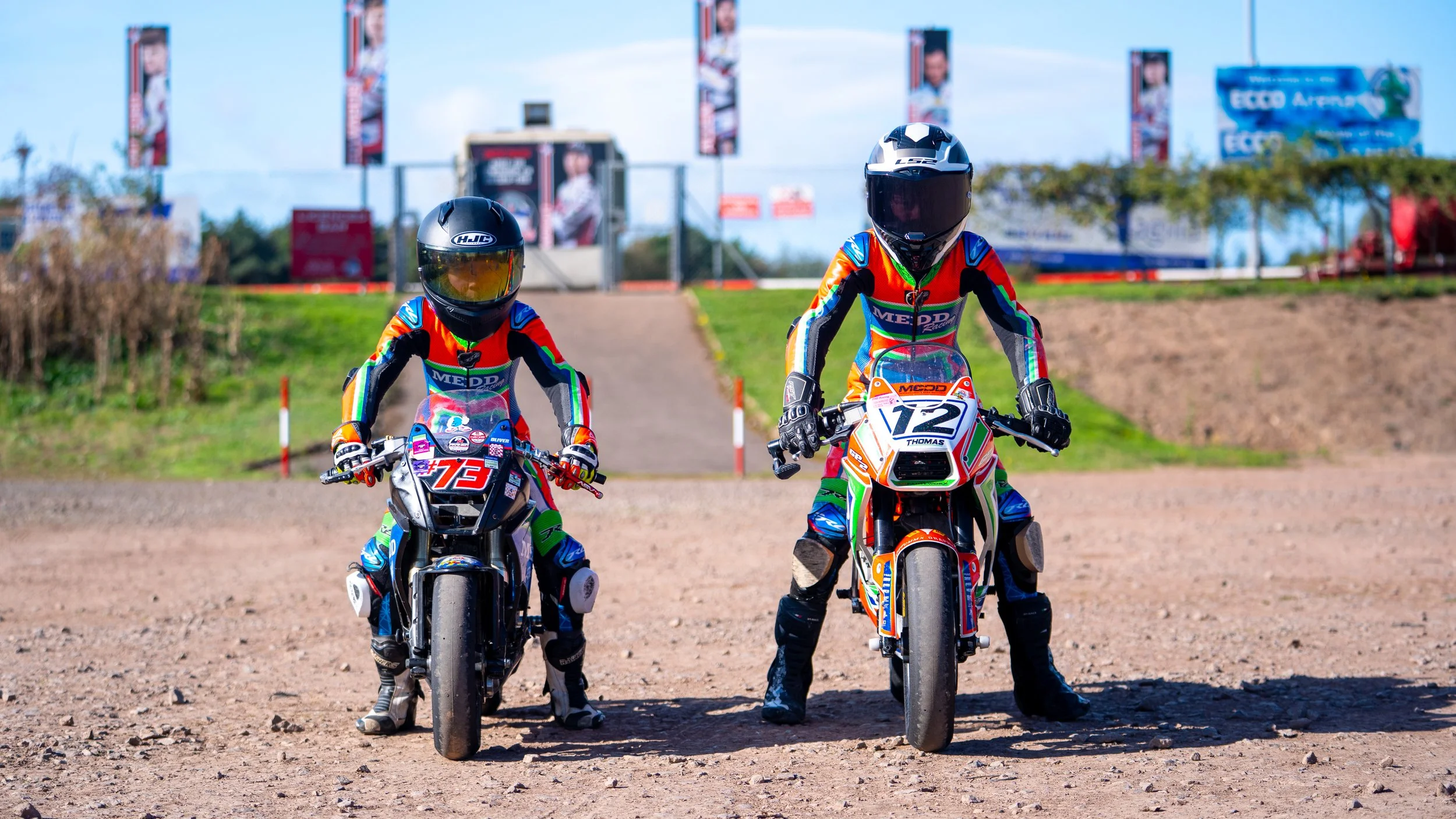
This was the usual mixed portrait/candid/action type of shoot, so a variety of styles were needed
There were also opportunities for more considered, portrait-style photographs.
Rather than creating traditional formal portraits, I used the environment of the circuit as part of the composition.
The helmets, riding equipment and bikes naturally became important elements within the photographs, helping to communicate the character of the sport while maintaining the privacy of the young competitors.
This is an important consideration when photographing children at sporting events. The images can still convey the excitement, concentration and commitment involved without needing to reveal their identities.
Creating a sense of speed with motion blur
One of my favourite techniques from the day was panning.
The photograph featured above demonstrates the effect particularly well.
Instead of using a very fast shutter speed to completely freeze the motorcycle, I used a slower shutter speed while following the movement of the bike through the frame.
The result is a relatively sharp rider and motorcycle against a heavily blurred background.
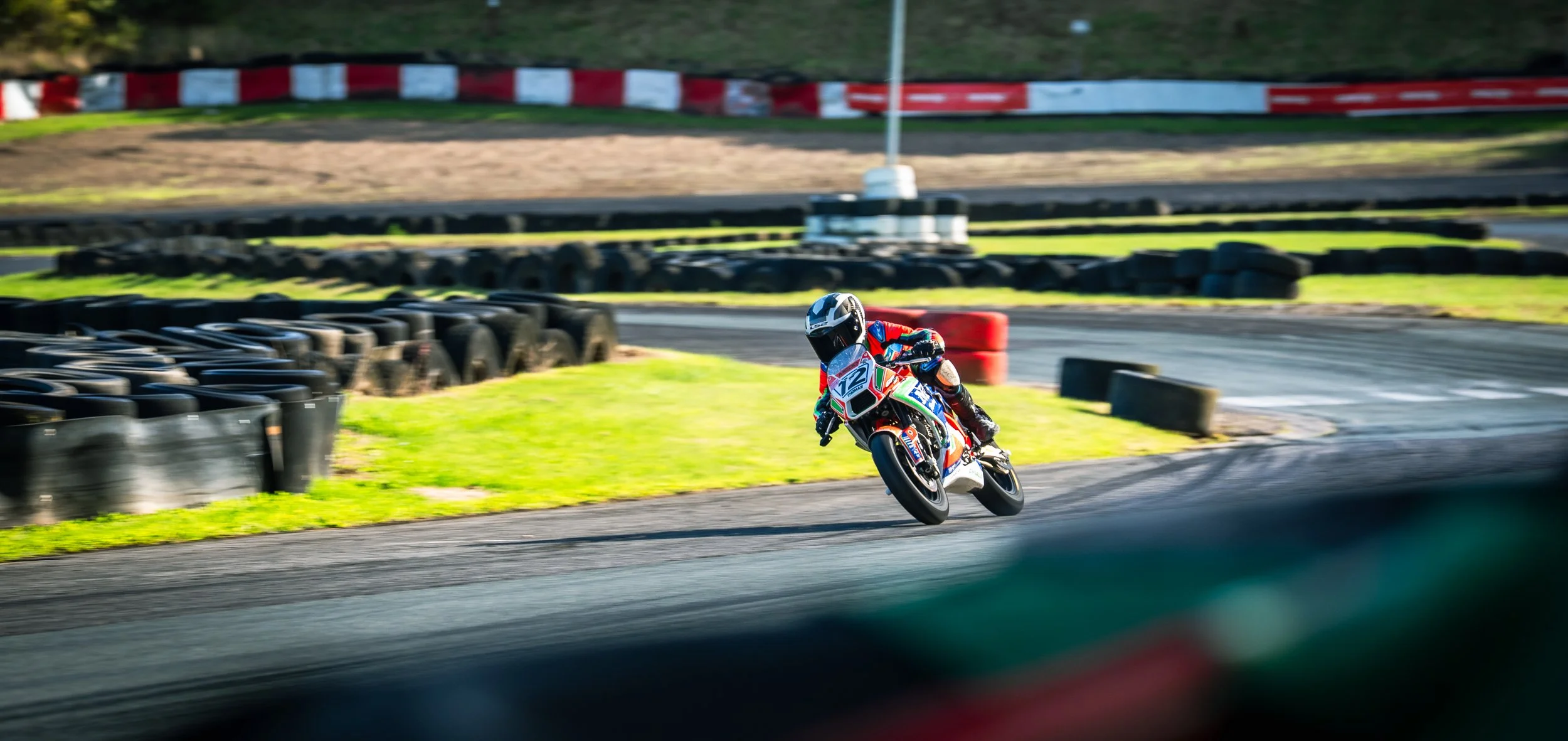
1/160 @ F5.6 , shot at 198mm on a 70-200 GM